Vientiane · Laos | National Symbol & Spiritual Core
Pha That LuangVientiane
Where the golden lotus blooms, witnessing a millennium of Lan Xang's light and shadows.
Discover the most sacred Buddhist site in Laos — featuring a soaring 45-meter golden spire, a three-level structure deconstructing Buddhist cosmology, and a solemn plaza where tens of thousands of devotees gather for the annual That Luang Festival.
Vientiane Landmark
Pha That Luang
Pha That Luang Vientiane
Soft sunset
Sun & Sky Planner
Times are estimated based on stupa coordinates
Live data from Open-Meteo at stupa coordinates
Core Highlights
Laos' National Symbol & Supreme Sanctuary
Pha That Luang is not just a temple; it is the highest symbol of sovereignty and national identity in Laos. It is a magnificent structure rebuilt by King Setthathirath in 1566, believed to enshrine the breastbone relic of the Buddha.
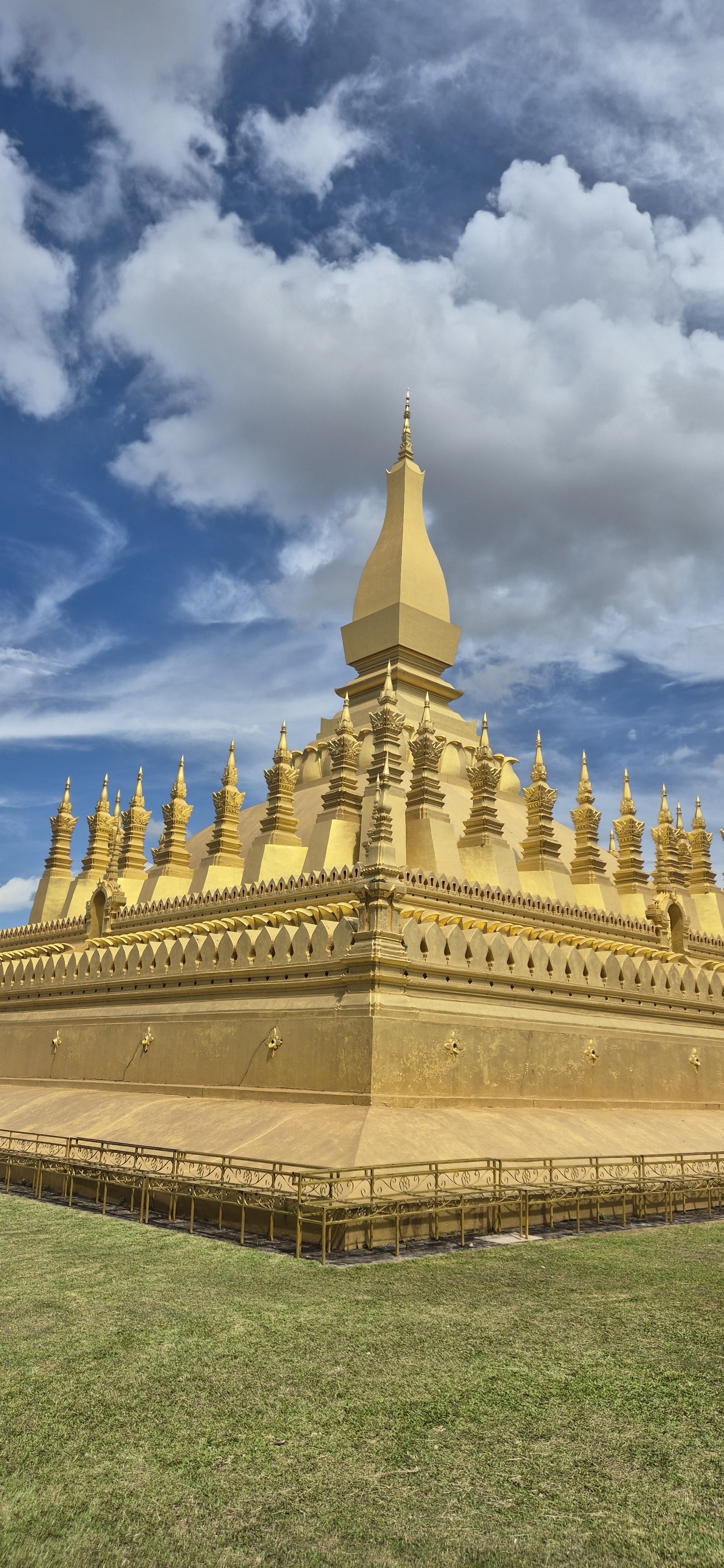
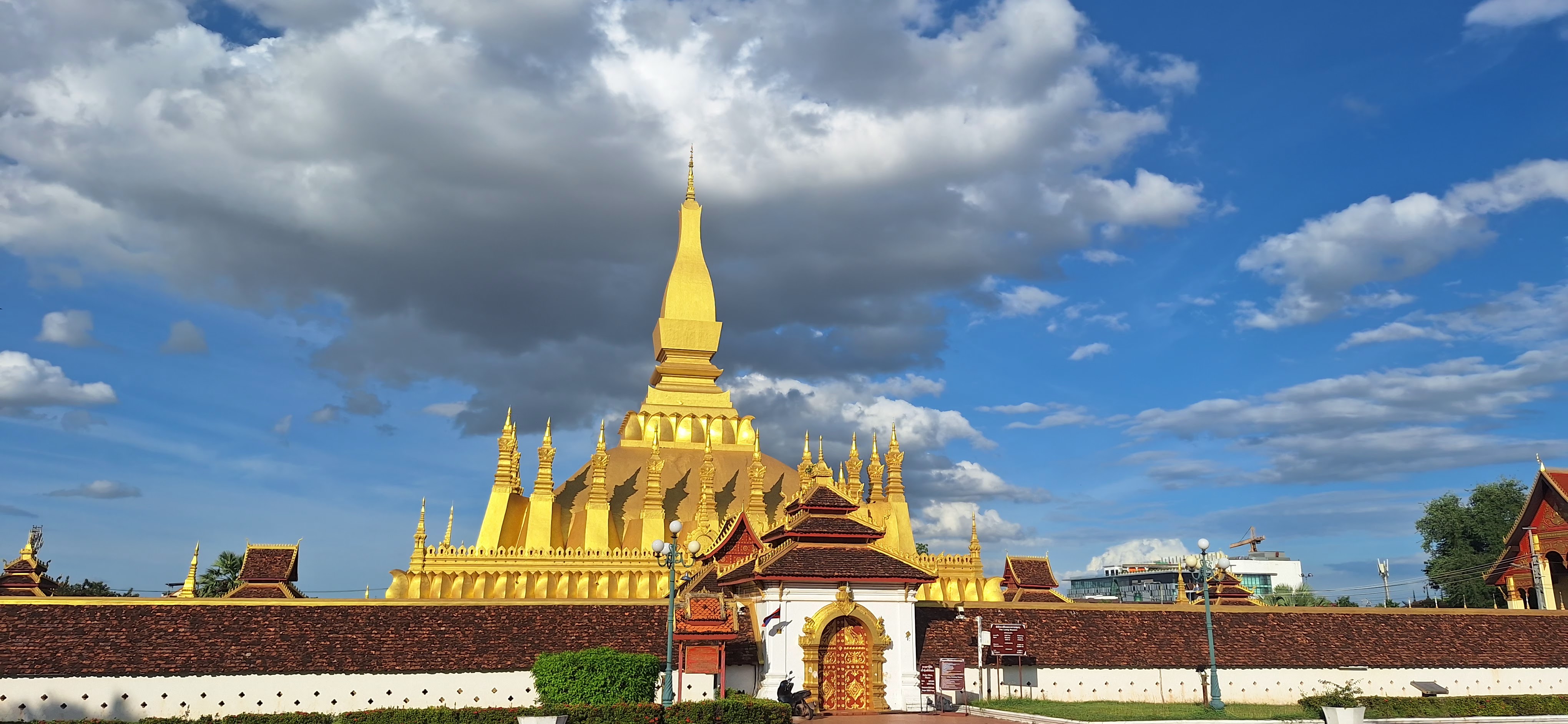
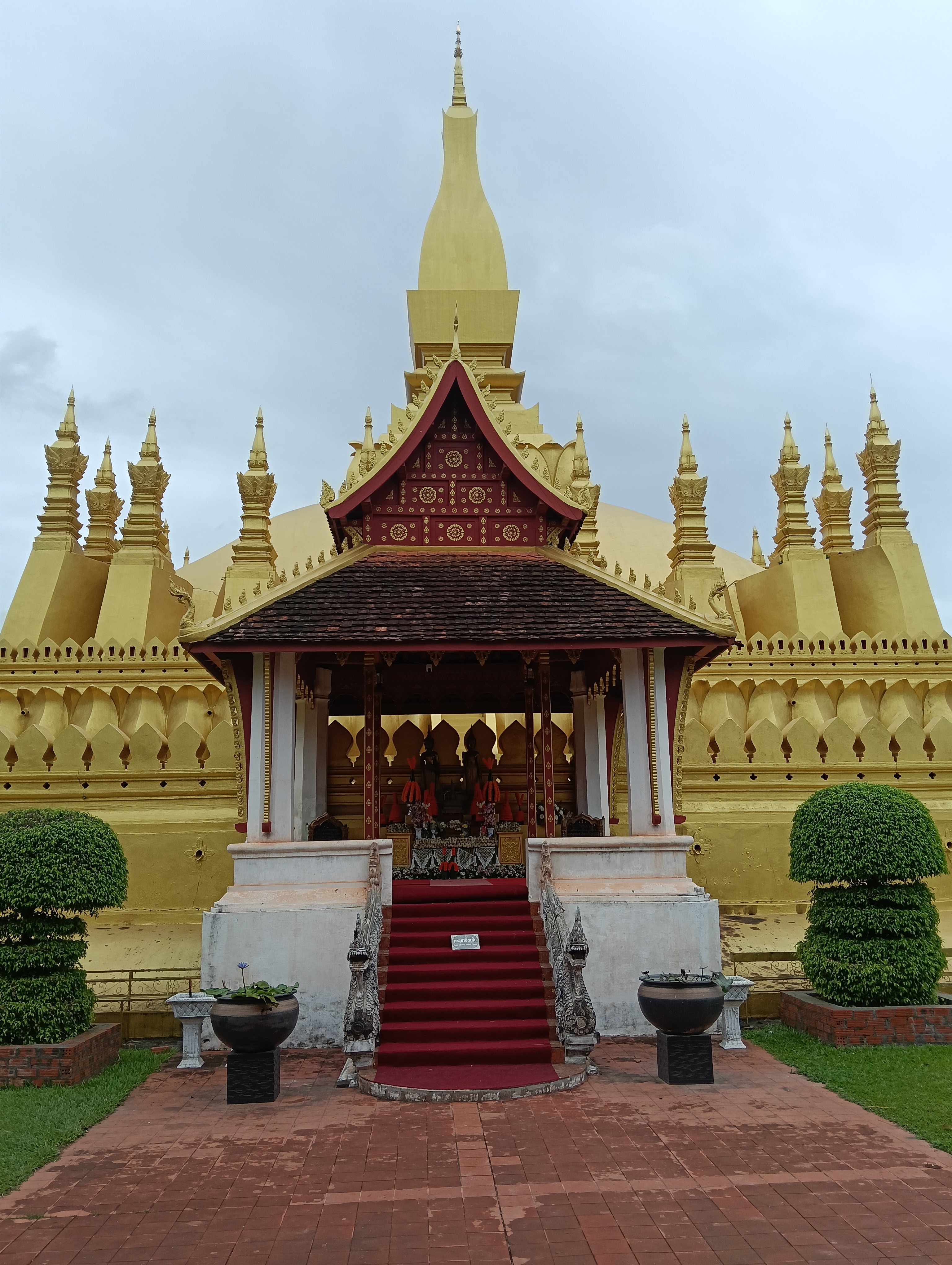
The 45-meter-high main stupa, with its spire shaped like a closed lotus bud, is covered in gold leaf. Shining brilliantly in the sunlight, it is the core emblem on the Lao national emblem and the Kip (LAK) banknotes.
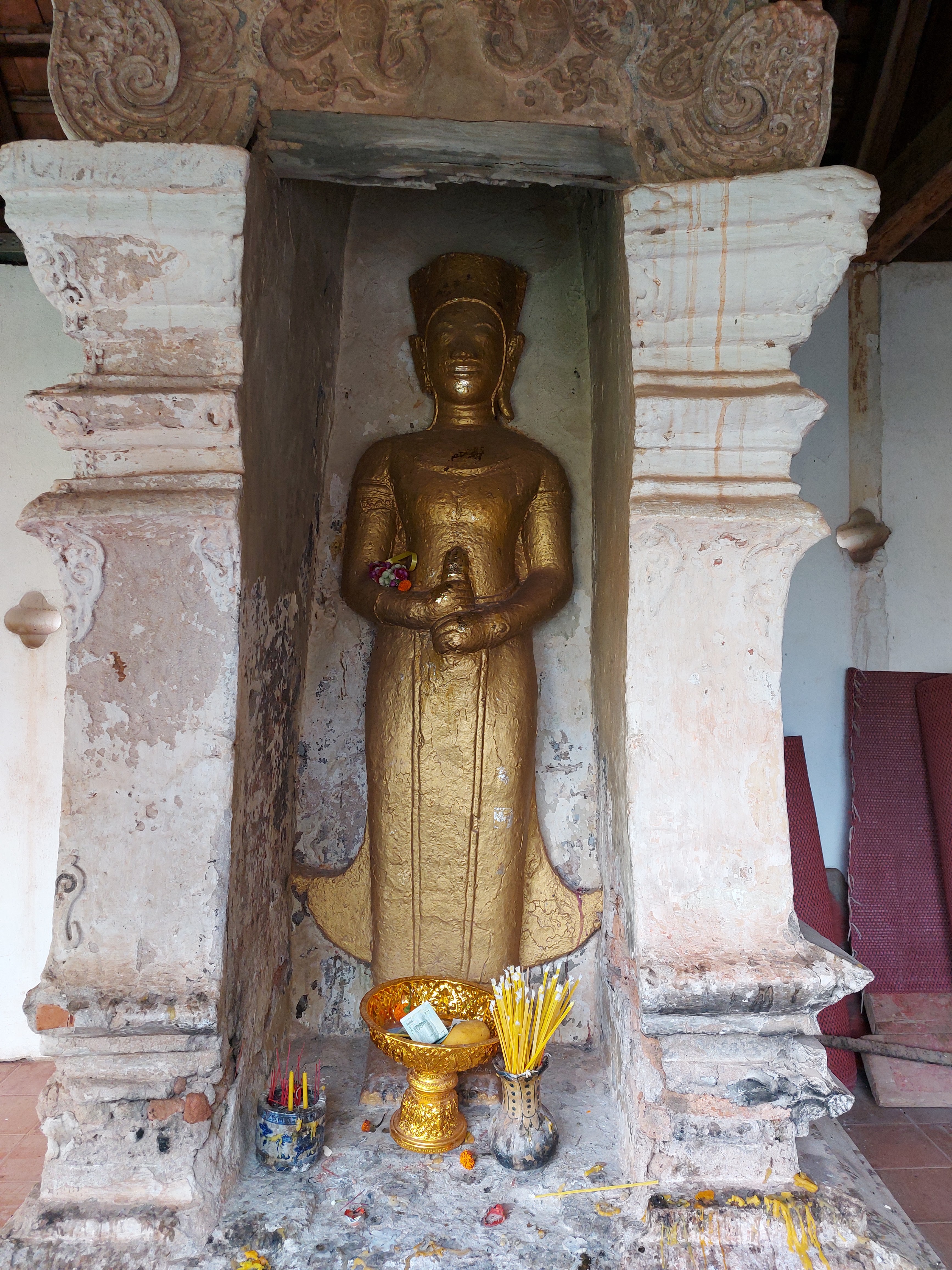
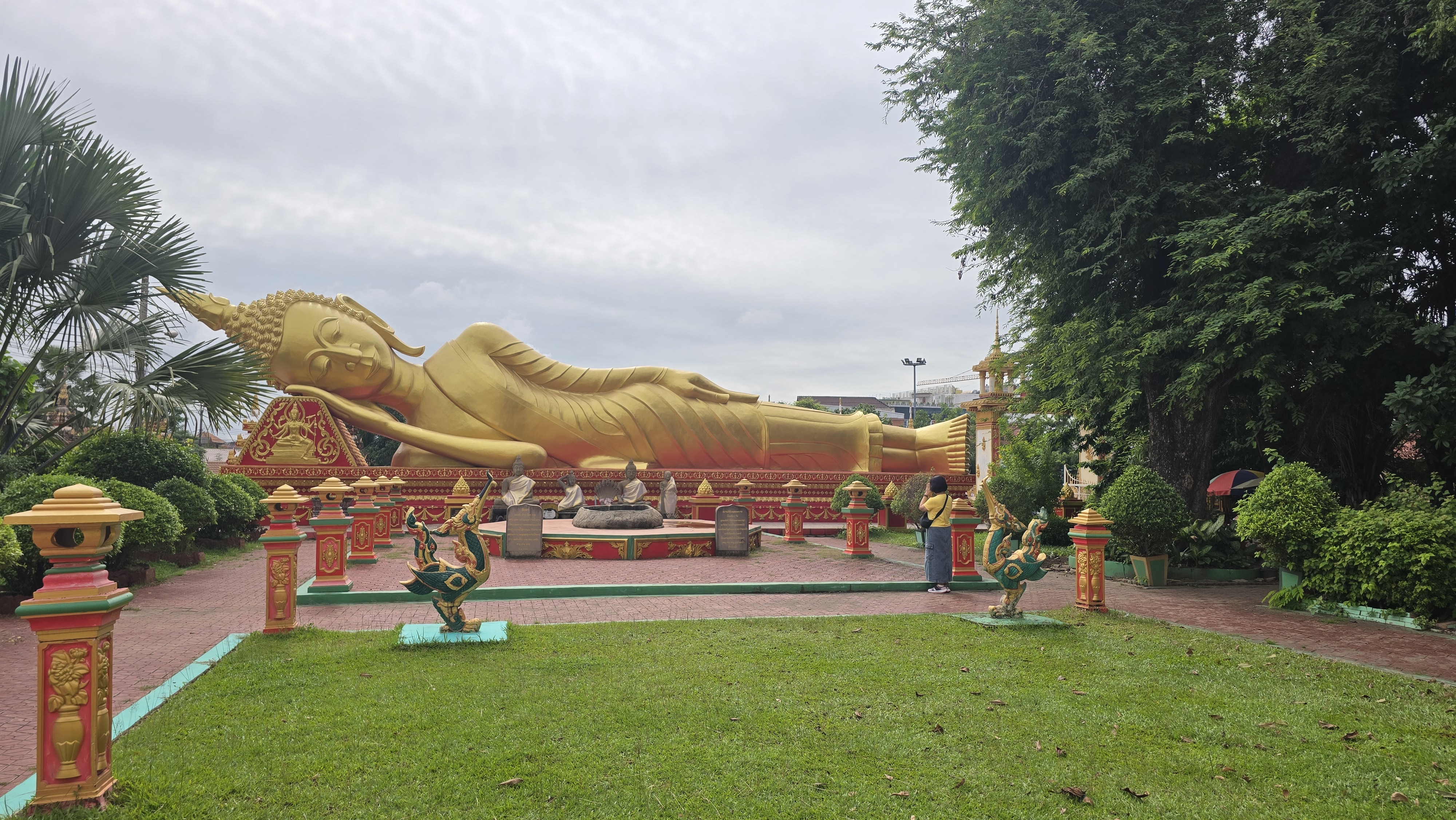
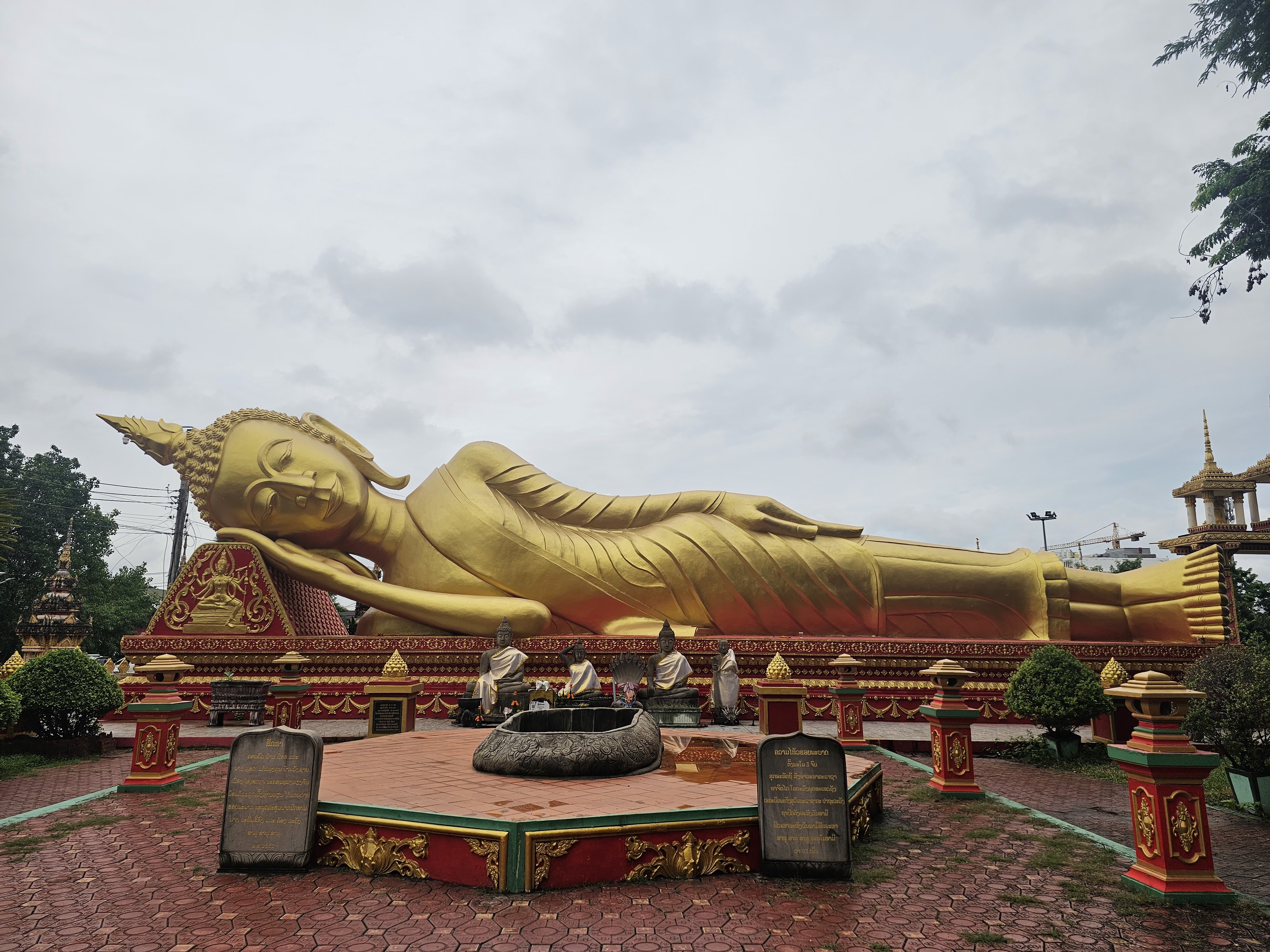
There are two temples flanking the north and south of the main stupa. In the courtyard of Wat That Luang Tai (the southern temple) stands a spectacular giant golden reclining Buddha, open to visitors for free.
“Walk slowly — feel the solemnity of the 30 perfections stupas and the golden main spire under the setting sun.”
It is recommended to arrive around sunset (16:00–17:00). The golden stupa takes on an ultimate radiant golden hue under the slanting rays.
See full guide →Architectural Symbolism
As the national symbol of Laos, the architecture of Pha That Luang carries profound religious metaphors. Its three-level structure is a perfect deconstruction of Buddhist cosmology:
The base of the stupa is square, measuring about 69 meters on each side. This level represents the material world of mortals bound by desires. There are four prayer pavilions (Haw Vihan) on each side for devotees.
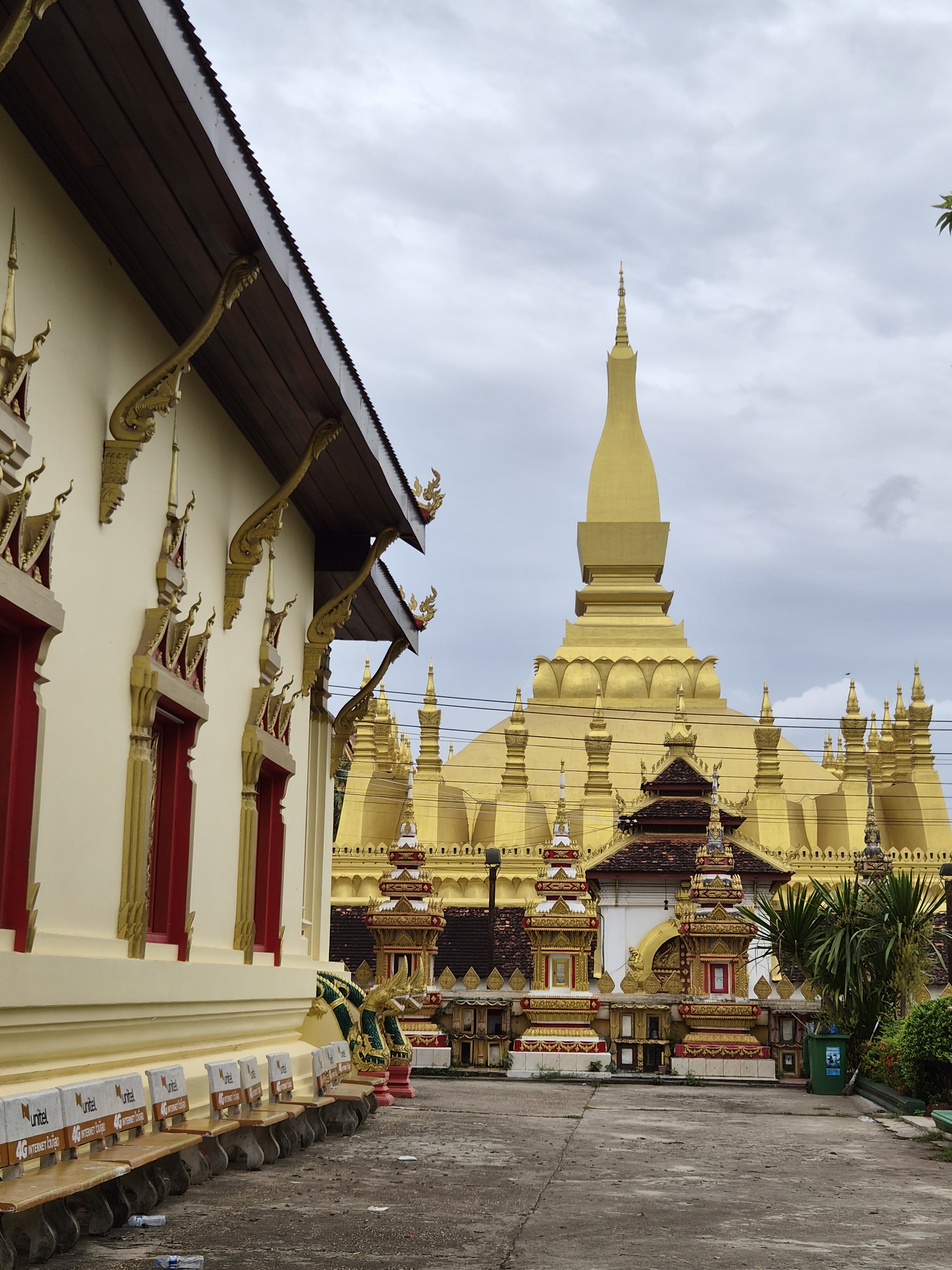
The second level is about 47 meters on each side, surrounded by 30 smaller stupas. These 30 stupas symbolize the 30 Buddhist perfections (Paramitas). This level represents the realm of form, free from material desires but still possessing form.
The highest part is an inverted lotus throne supporting a 45-meter-tall golden spire. This represents the highest realm of Buddhism—the formless realm and ultimate Nirvana, symbolizing complete liberation and enlightenment.
History & Timeline
From Legend to National Symbol
Pha That Luang is not just a stupa; it is the chronological chronicle of Lao national history, witnessing the vicissitudes of this land.
💡 Did you know? Laos' National Emblem
Pha That Luang is more than a temple; it is the highest symbol of Lao sovereignty and national identity. Its image is featured right in the center of the national emblem, on every denomination of the Lao Kip (LAK) banknote, and on the official seals of Lao embassies.
Legendary Origins
According to local texts and oral history, in the 3rd century BC, envoys of the Indian Emperor Ashoka arrived here to bury the Buddha's breastbone relic and built the original stupa. This legend endows Pha That Luang with unparalleled sacred status.
Establishing the Form
King Setthathirath established the golden stupa and its capital status. He rebuilt Pha That Luang on the ancient ruins and established its iconic lotus shape. The main stupa is surrounded by 30 smaller stupas and originally had four temples (only two remain today).
Wars and Destruction
The Siamese army sacked Vientiane, leaving That Luang ruined and covered by jungle. In 1828, Siamese (Thai) forces invaded and completely looted Vientiane. The gold of Pha That Luang was stripped away, and the stupa was reduced to ruins.
Restoration and Rebirth
The French École française d'Extrême-Orient (EFEO) precisely restored it to its original appearance. After multiple reconstructions, the stupa was reborn and became the supreme symbol of national sovereignty and identity after Laos gained independence.
That Luang Festival
Boun That Luang
That Luang Festival (Boun That Luang)
The That Luang Festival is the grandest national religious and cultural festival in Laos (held on the full moon in November).
The festival lasts from three days to a week. Monks from all over the country and even neighboring countries gather here. At dawn, tens of thousands of devotees participate in a massive alms-giving ceremony (Tak Bat); at night, people hold incense, candles, and flowers for a solemn candlelight procession (Wien Tien) around the main stupa. Beyond religious rituals, the plaza hosts traditional markets, Lao music performances, and folk games. For the Lao people, participating in the That Luang Festival is not just about gaining merit, but an annual reaffirmation of their national identity.
💡 Pro tip: Understand the difference between the alms-giving ceremony (Tak Bat) and the candlelight procession (Wien Tien). Be aware that traffic around the area is heavily restricted during the festival.
Visitor Guide
Everything You Need to Know Before You Go
Practical advice for a fulfilling time at Pha That Luang.
Two Ways to Explore
Choose your pace — wander the outer plaza or delve into the cloisters.
Pace:Free· Open spaces
Families, Photographers
Admire the King Setthathirath statue in the plaza, or visit the giant reclining Buddha in the adjacent temples.
Pace:Ticket Required· Deep dive
First-timers, Culture Enthusiasts
Enter the inner cloisters of the main stupa to get a close-up view of the 30 paramita stupas and feel the weight of history.
⚠️ Practical Tip
The inner cloister may briefly close for a break around noon. We recommend noting 'may close briefly at noon, please verify on-site'.
08:00 – 17:00 (Tuesday to Sunday)
- Opens08:00
- Best Light16:00 – 17:00
- QuietestEarly Morning
- Closes17:00
Fees
- Outer Plaza & Twin TemplesFree admission
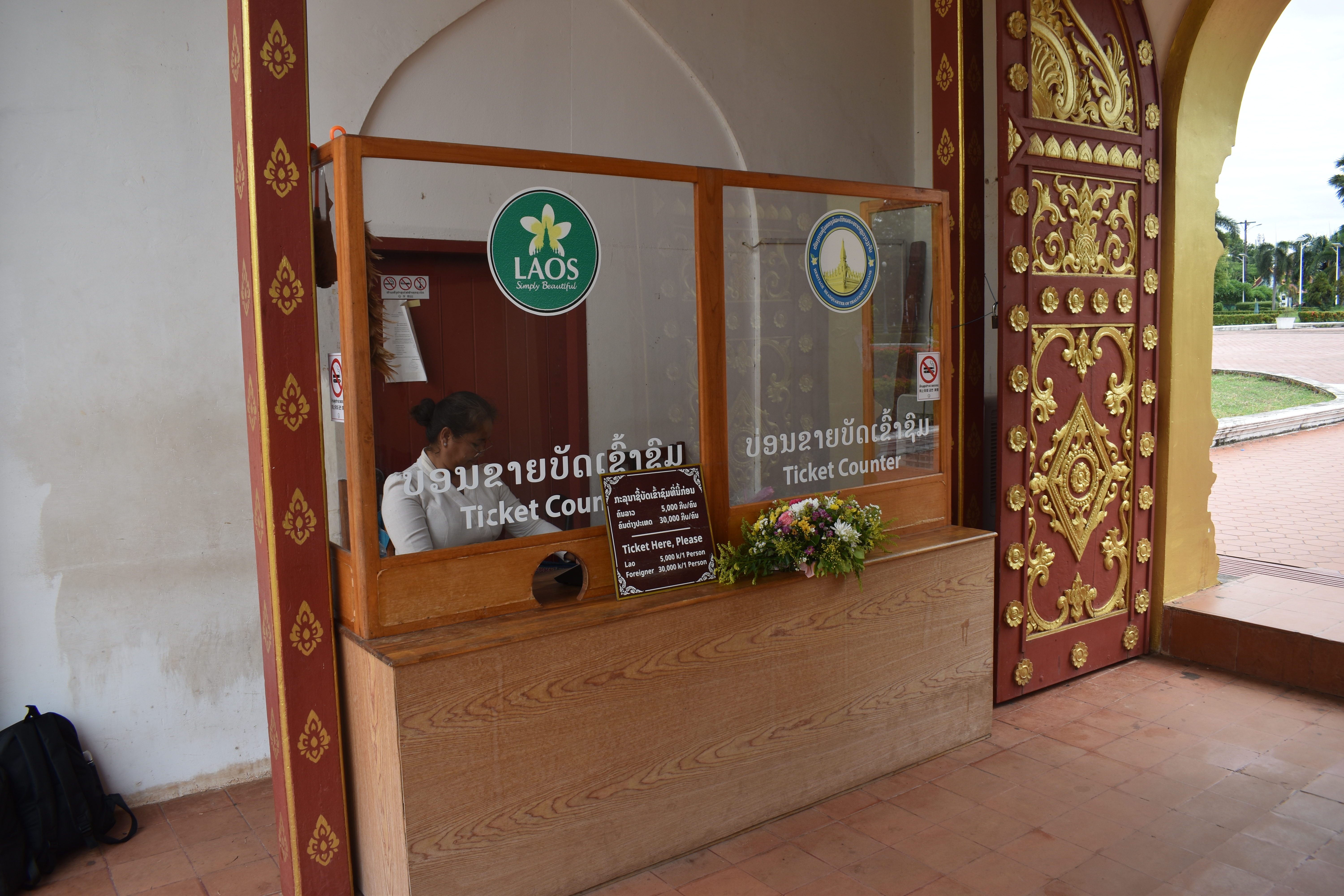
- Inner Cloister TicketAround 30,000 LAK for foreign visitors
- Sinh (skirt) RentalAround 10,000–20,000 LAK
Ticket prices may be adjusted slightly by local policy. We recommend carrying Lao Kip (LAK) cash.
How to Reach Pha That Luang
Airport → Pha That Luang · step by step
- From Wattay International Airport (VTE)Wattay International Airport is about 7-8 km from Pha That Luang. Allow roughly 20-30 minutes, costing around 100,000–150,000 LAK.
- After collecting your luggage, follow the 'Arrivals' signs out to the airport taxi stand or the arrivals-hall exit.
- We recommend a ride-hailing app: Loca is the most popular in Vientiane (Grab works in some areas too). Set the destination to 'Pha That Luang' and the driver will follow GPS.
- Alternatively, buy a ticket at the official Airport Taxi Counter, tell them your destination, and agree on a fare of about 100,000–150,000 LAK (roughly 5–7 USD).
- The trip is about 7-8 km, mostly along Route 13 / 23 Singha Road, taking around 20-30 minutes (longer in rush hour).
- Get off at the main plaza entrance. To enter the inner cloister, buy a ticket at the booth (about 30,000 LAK for foreign visitors); women not dressed appropriately can rent a Sinh skirt at the entrance.
- From City Center / PatuxayPha That Luang is only about 3.5–4 km from downtown Vientiane. Taking a Tuk-Tuk costs about 40,000–60,000 LAK; using Grab or Loca takes about 10–15 minutes directly.
- CyclingRent a bicycle or shared e-bike in the city, ride straight down 23 Singha Road, and you'll easily arrive. You will pass Patuxay along the way.
- Public BusYou can take a city bus that passes That Luang from the Morning Market bus station, but for tourists, taking a taxi/Tuk-Tuk is much more convenient.
Photography Guide
Optimized suggestions for shooting at That Luang.
Best Light
Recommended 16:00–17:00. The slanting sun makes the gold-leaf stupa glow an ultimate reddish-gold.
Shoot right at opening (08:00) to avoid tour groups and harsh overhead light.
Shoot the illuminated golden stupa from the outer plaza after closing.
Golden Photo Spots
Puddles outside the stupa or water features can capture a perfect reflection of the stupa and blue sky.
Get low to the water surface
Stand directly behind the King Setthathirath statue to frame the king and the golden stupa together.
Use a 16mm/24mm wide-angle lens, shoot upwards
Use the pillars of the cloister to frame the inner stupa.
Utilize perspective and leading lines
Camera Settings
Slightly underexpose to retain highlight details
Tap on the stupa to meter and lower exposure
Polarizing filter, low angle
Hold phone upside down close to the ground
Tripod, f/8, long exposure
Turn on Night Mode and hold steady
Quick Tips
- Respect local beliefs, do not climb ruins
- Midday overhead sun easily overexposes, try to avoid
- Ask for permission before photographing monks
- Remember sun protection and hydration
Best Time to Visit
Laos has three main seasons.
Cool Season
Pleasant weather, especially during the That Luang Festival in November, the absolute best time to experience local culture.
Hot Season
Extremely hot; recommended to visit in the early morning or late afternoon to avoid the midday sun.
Wet Season
Frequent showers, but the air is fresh afterward, and it's easy to capture perfect reflections of the golden stupa.
Safety & Convenience
- Sun Protection — The plaza has no shade, and midday sun is very harsh. Make sure to use sun protection.
- Personal Belongings — During crowded times like the That Luang Festival, keep a close eye on your belongings.
- Comfortable Footwear — Although there's a dress code, you'll need to take off your shoes to enter certain areas. Easy-to-remove flat shoes are recommended.
🌫️ Hot & Smoky Months
March–April can be very hot and hazy due to crop burning; travelers sensitive to heat might prefer Nov–Jan.
Accessible for Everyone
The That Luang plaza is very open and flat.
- Wheelchairs & Strollers — The outer plaza and twin temples are largely barrier-free.
- Resting — There are shaded areas around the edges of the plaza and inside nearby temples.
- Toilets — Public restrooms are available nearby.
Frequently Asked Questions
What are the opening hours of Pha That Luang? +
The inner cloister is usually open from 08:00–17:00 (Tuesday to Sunday), and may close briefly at noon. The outer plaza is open all day.
Do I need a ticket? +
The outer plaza and adjacent twin temples are free. Entering the inner cloister requires a ticket, about 30,000 LAK for foreign visitors.
Is there a dress code? +
Yes. As the highest religious sanctuary, clothing covering shoulders and knees is mandatory. Women who don't comply can rent a traditional Lao Sinh (skirt) at the entrance.
How do I get there from Vientiane city center? +
It's only about 4 km away. Taking a Tuk-Tuk or using Grab/Loca is the easiest way, taking about 10-15 minutes.
What is the That Luang Festival? +
It is the grandest religious festival in Laos, usually held during the full moon in November. Tens of thousands of monks and devotees gather for alms-giving and candlelight processions.
Nearby Places
Another major Vientiane landmark located on the main road to That Luang. You can climb to the top for a city view.
→ Plan your trip →Vientiane's most active temple, the center of local blessing and worship.
→ Plan your trip →The night market along the Mekong. Head here for food and shopping after visiting That Luang in the evening.
→ Plan your trip →Etiquette & LNT
Responsible Cultural Experience
As the most important Buddhist sanctuary and cultural heritage site in Laos, Pha That Luang requires visitors to treat the grounds with the utmost respect. We advocate for Leave No Trace (LNT) principles and community-respecting travel.
Dress Code Alert
As Laos' highest religious sanctuary, That Luang has stricter dress codes than normal attractions:
❌ Sleeveless shirts, tank tops, shorts, and skirts above the knee are strictly prohibited.
💡 Pro tip: If female visitors' clothing is non-compliant, they must rent a traditional Lao tube skirt (Sinh, rental fee ~10,000–20,000 LAK) at the ticket booth. This is also a fantastic local cultural experience.
Maintain Silence
Pha That Luang is not just an attraction; it is a sacred place for monks' practice and devotees' prayers. Please lower your voice and maintain solemnity.
Circumambulation
When walking around the stupa for blessings, it is traditional to walk in a clockwise direction (Pradakshina), representing respect for the Dharma.
Leave No Trace (LNT)
Do not touch or climb any historical structures. Take all trash with you and leave no human trace behind.
Food & Drinks
Supplies Around the Plaza
There are several snack stalls and cold drink carts around the outer plaza of That Luang, especially active in the late afternoon.
Cold drinks from the stalls — comforting in the midday heat.
Local street snacks around the plaza.
A hot bowl of noodles in a nearby small restaurant.
A rich, sweet iced coffee to wrap up your visit.
“After exploring the magnificent stupa, grabbing a fresh coconut by the plaza is the best way to relax.”
Gallery
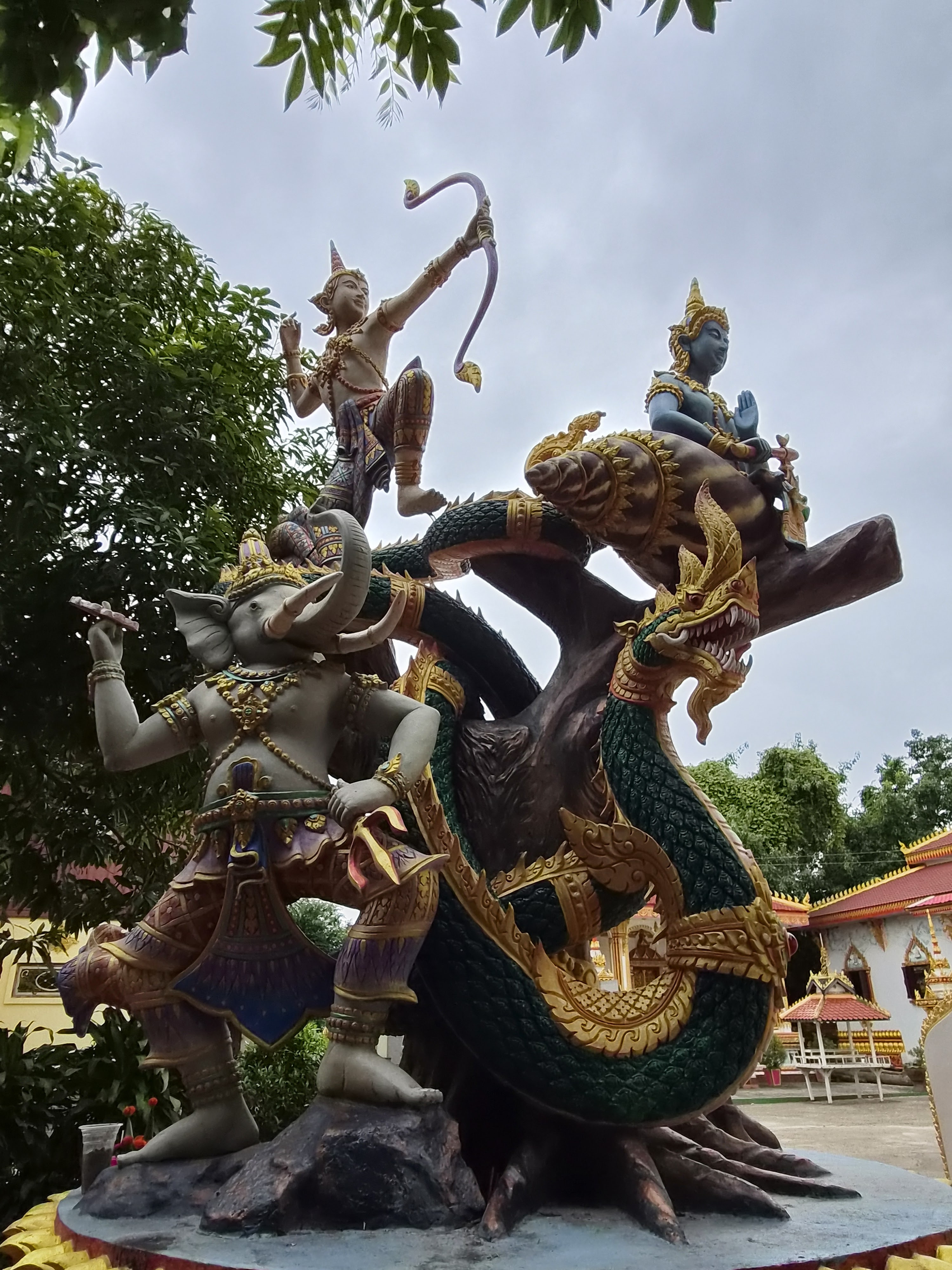
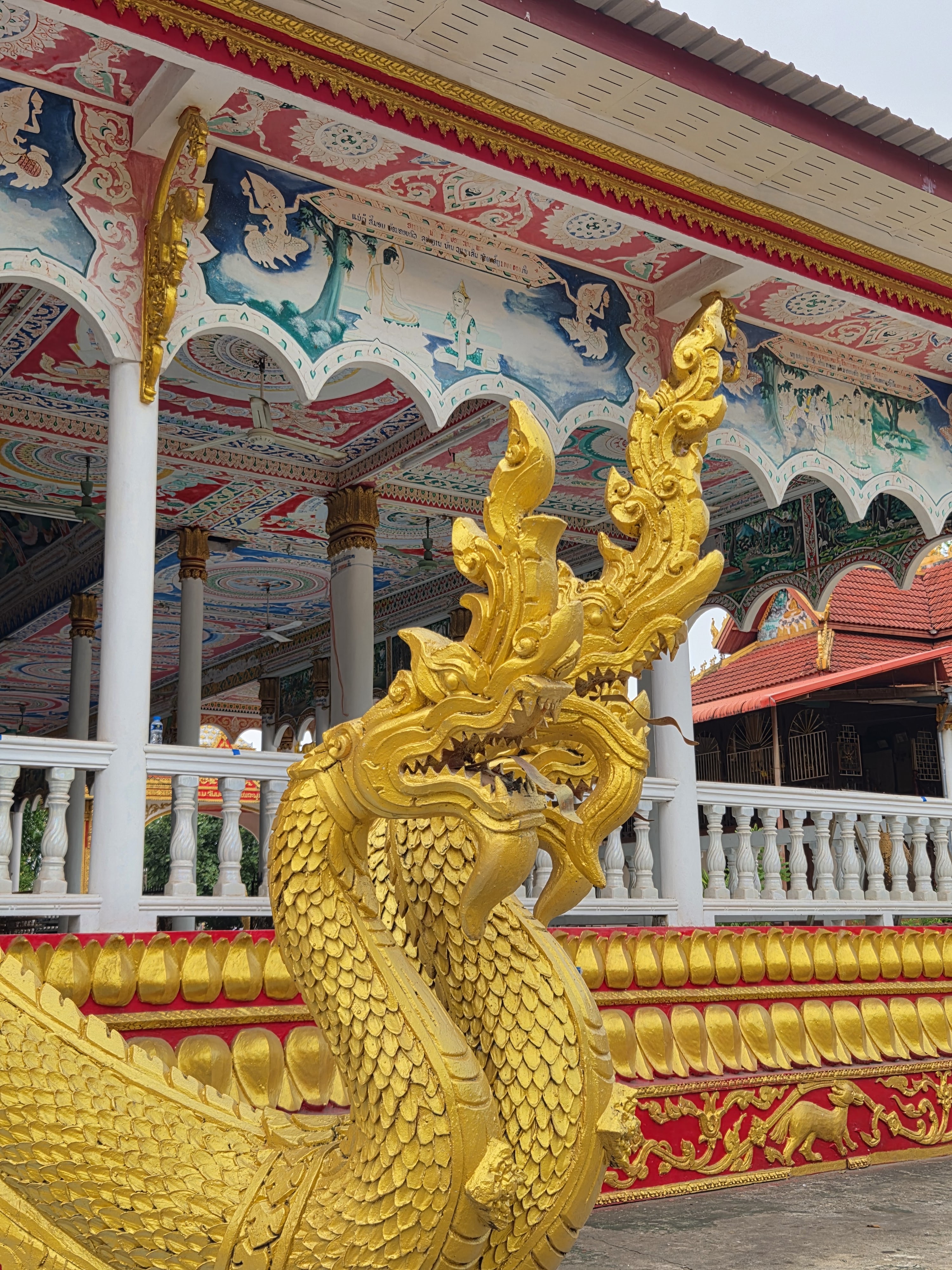
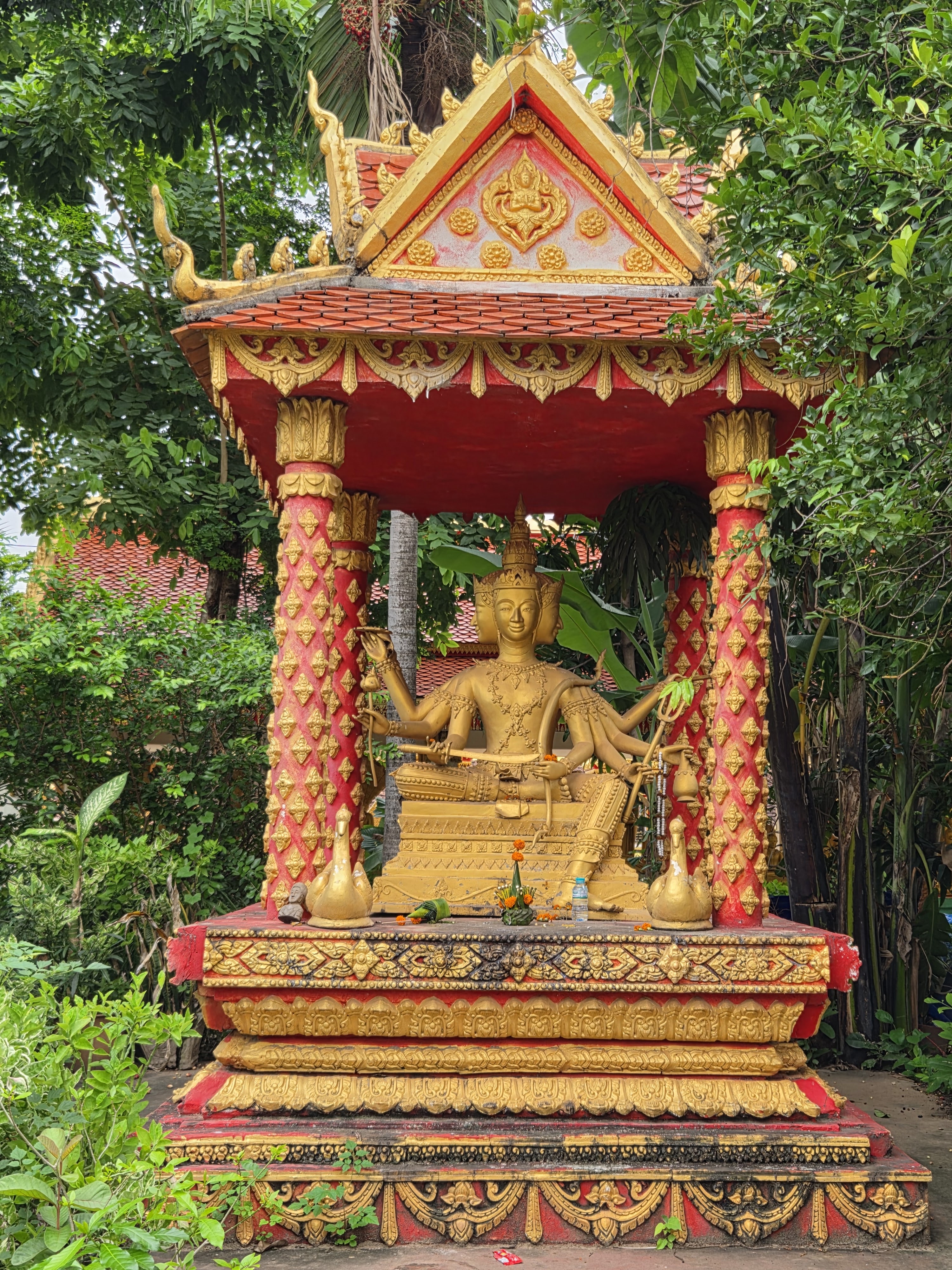
Moments at That Luang
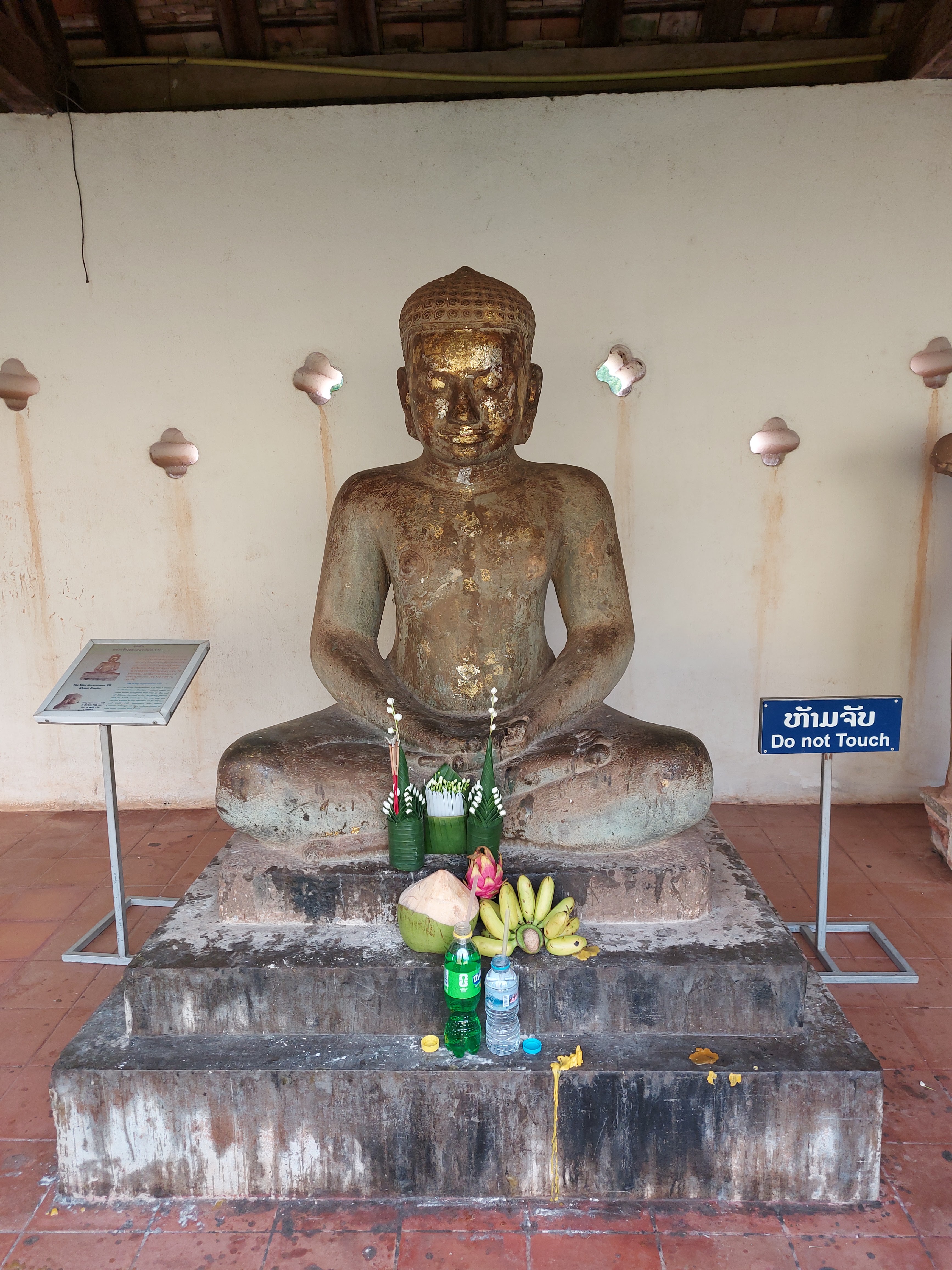
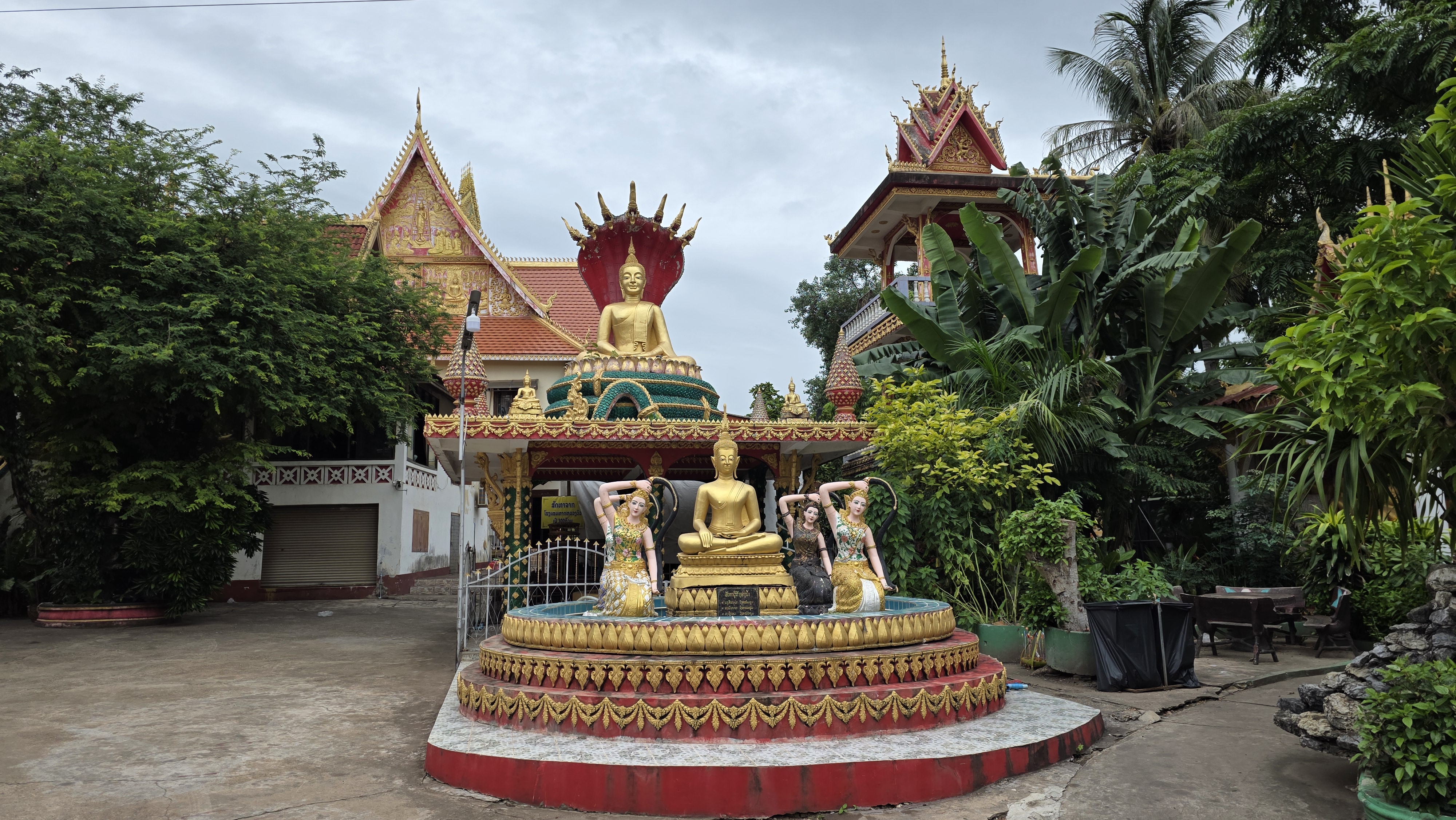
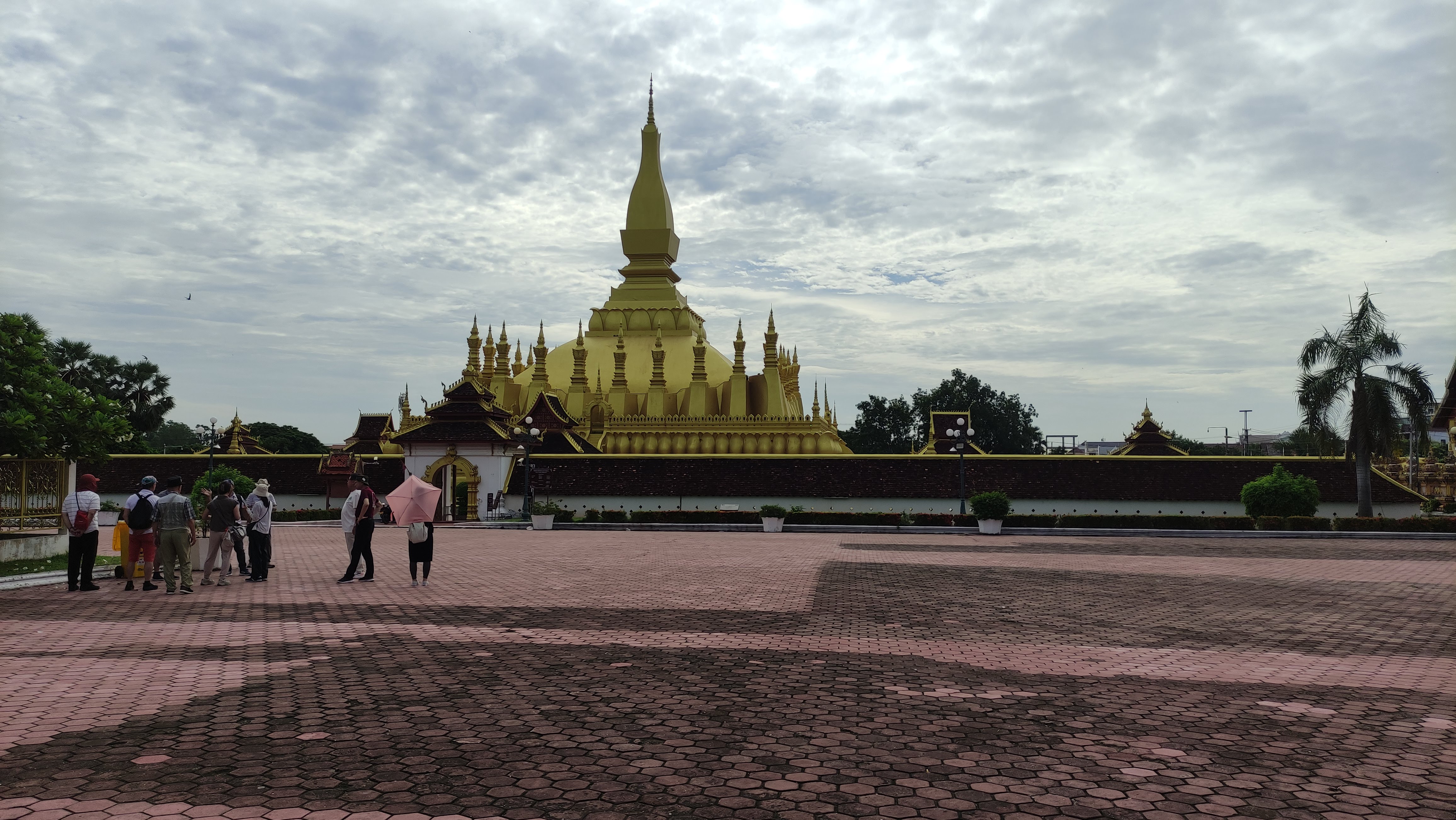
A day at the stupa — from the tranquility of dawn to the radiant gold at sunset.
Images are illustrative of the atmosphere; light and shadows change over time.
Images are illustrative and for reference, not for commercial use.

Reviews
Visitor Ratings & Impressions
The current Google Maps rating snapshot for Pha That Luang, plus an editorial summary of what visitors commonly mention.
Ratings and review counts change over time. This snapshot was verified in October 2026 — open the Google Maps listing for live, individual reviews.
What visitors commonly mention
Recurring themes summarised by our editors from public feedback — not quotes from individual reviewers.
The gold-leaf main stupa, especially in late-afternoon light, is the photo visitors remember most.
The giant reclining Buddha at Wat That Luang Tai is repeatedly described as impressive and worth the short walk.
Visitors recommend arriving early to avoid the midday heat and to see local devotees at prayer.
Shoulders and knees must be covered; renting a sinh skirt at the entrance is a common workaround.
A short tuk-tuk or ride-hail trip from central Vientiane is the usual way visitors arrive.
Holidays and the That Luang Festival are busy, while the large plaza keeps the site comfortable on ordinary days.
We do not republish individual reviews. The themes above are an editorial summary for reference only and are not officially endorsed by the site.
In-Depth Guides
In-Depth Topic Guides
Dedicated pages on Pha That Luang tickets, opening hours, the festival, and history.
Visiting Guide
On-site route, suggested duration, dress code and facilities.
Read guide →Entrance Fee & Hours
Inner-cloister ticket, free areas and opening times (checked Oct 2026).
See details →That Luang Festival
Festival dates, rituals and visitor tips.
Learn about the festival →History & Architecture
From the legend to King Setthathirath's rebuild, explained.
Read history →Sources
Our References
This non-profit guide compiles public information to help visitors plan their trip responsibly.
Facts & Data
Ratings, opening hours, ticket prices and coordinates are compiled from public sources and verified in October 2026, but may change — please verify on-site before your trip.
Found a mistake?
We are a small non-profit team. If there is any incorrect or outdated information, please let us know and we will fix it.
Email us© 2026 Pha That Luang Guide · Non-profit visitor resource
Location & Map
Finding Pha That Luang
Located in the Xaysettha District, about 4 km northeast of Vientiane's city center. It is the core landmark of the capital.
📍 That Luang, Xaysettha District, Vientiane, Laos
🧭 Plus Code XJGP+JH Vientiane
🌐 17.9766°N, 102.6364°E